Back in the early 1970s I was invited to give a keynote speech at a National Science Teachers Association meeting. Bill Aldridge, who was then president of the NSTA said to me, "Vicki, the women's movement is ruining education." What he meant was that, up to this point, teaching was the profession of choice (along with nursing) for bright women. And now that the women's movement was creating more opportunities for women to become doctors or lawyers, there was a brain drain away from teaching.
For those of you who are too young to remember what those days were like allow me to explain. I started my career as a teacher in the early '60s. I was 22 years old, married, and armed with a Master's degree in high school biology, chemistry and physics instruction. Yet, I had a hard time finding a teaching position. I had no experience, except for student teaching. I had to be paid a higher starting salary because I had an advanced degree. And I was married, which implied that I would get pregnant and create problems for them to replace me. I was asked at interviews what my intentions were for starting a family (now against the law). I was ultimately hired by an unmarried, careerist, public school, female principal to teach 7th and 8th grade science. She put her arm around me and said, "I think you have great potential as a teacher. Whatever time you give us, I'm grateful for." I gave them 2 ½ years and was forced to quit in my sixth month of pregnancy because I "showed."
Make no mistake. I LOVED teaching. The department chair handed me a textbook to teach from. I took one look at it, and decided I couldn't inflict such dry, pedantic stuff on my students. I also noticed that my classroom door was closed and no one was watching me. So I went to the library and found exciting books on the same subjects I was required to teach. I used them to create my own materials. One day, when Mr. Dinsmore, the authoritarian, ever-scowling, assistant principal unexpectedly dropped into my classrooms to observe me, my students and I were in the middle of deriving the equation for the Doppler Effect (in 8th grade!). They knew I was being evaluated and rose to the occasion. Every hand went up. Every kid was in lock step with me. They broke into applause when he left after an abbreviated time! That spring, my students took the assessment tests (after about three days of test prep); they did just fine.
Today's public school teachers are not trusted with the kind of autonomy I had. They are burdened with paperwork and have all kinds of rubrics to worry about both for themselves and for their students. A friend of mine, who is a professor in a CUNY school of education, tells me that teachers in public schools advise her students NOT to become teachers.
The good news about the CCSS is that it is refocusing attention on education, to the point where there is a grassroots movement against them, spearheaded by Diane Ravitch. Education has made some progress since I left the profession. We now have a lot more resources and knowledge for teaching children with special needs. Technology and the availability of information are having an impact. When we look at Finland, which is successfully creating a knowledge-based economy, the teaching profession is the profession of choice for bright people. Each school faculty operates as a team to do whatever it takes to get students to learn. If you are not aware of how this works, read this article from the Smithsonian Magazine and this recent piece in the Providence Journal. Finnish schools trust their teachers and give them the support they need to do their job. Contrast this with the current undermining of teachers and blaming them for the quality of American education.
Two years ago I interviewed Finnish Professor Jorma Routti, one of the founders of Finnish venture capital and one of Europe's leading technology experts. "Education cannot be rushed," says Professor Routti. "There are no short cuts, no magic bullets. It's a law of nature. It takes nine months to make a baby and 30 years to make an engineer."
When I first read the Common Core State Standards, I liked them. I didn't see anything controversial in the descriptions of the behaviors of speaking, listening, reading, and writing that are obvious in an educated person. I really liked the requirement that students increase their reading of nonfiction, hoping that the CCSS would be an opening for us authors of children's nonfiction to see our books finally utilized for classroom work. Also, it was clear that we authors are masters of the CCSS skills ourselves. They perfectly describe what we do every day. If you're wondering just how we do it, check out our group blog of top children's nonfiction authors, Interesting Nonfiction for Kids or I.N.K. We are devoting the month of October to discussing how we exhibit the Common Core State Standards in our craft and our books. It is a fascinating overview of the CCSS in action and shows how these overarching standards can be manifested though many individual approaches, the same way great teachers also incorporate them into the art of teaching.
I am also a great admirer of Diane Ravitch. If you want evidence that our public school system is better than the reformers say it is, that our test scores are not so terrible compared to other countries, that test scores themselves are poor indicators of achievement in the marketplace (where it seems we must come out as number one), and that the policies of the past ten years from both the Bush and the Obama administrations are having a profoundly destructive effect on public education, I strongly recommend her new book Reign of Error. After Diane read my last Huff Post "Common Core State Standards, Rules and Art" she wrote me that she didn't disagree but that I should "follow the money." Who am I not to take the advice of this brilliant scholar-historian and champion of public education? But then, I am not one for close examination of long, painstakingly researched documents with the purpose of accumulating a preponderance of evidence, especially when it is done so well by others, which is how come I write for children. I can't top Joanne Barkan's insightful essay in Dissent Magazine, "Plutocrats at Work: How Big Philanthropy Undermines Democracy." High-minded standards are corrupted by well-funded bureaucratic agencies with a disguised agenda.
For a little more than a year, I served on the board of a charter school for minority students. I was amazed at how well-funded it was and how many people were feeding at money trough from educational consultants, to building contractors to internet equipment suppliers. There was relatively little left over to buy classroom sets of books by authors like me. Like most classrooms, the hegemony of the text book publishers dictated school reading materials--a one-size-fits-all approach to curriculum content. This was a science/technology elementary charter school and I was on the board because I know something about teaching science. I left because my services in this regard were under-utilized (mostly I voted on stuff I didn't know much about, like who should be the school's accountant and what food service should be hired) and NY State precludes schools from doing anything commercial with board members--even buying a few books with my name on it as author could be deemed a conflict of interest. (You can see that I'm trying to keep myself pure.)
So instead of following the money in this post, I thought it might be useful to show where money is NOT a corrupting factor. Merit pay and bonuses for teachers do not improve teaching as reported in the Huffington Post two years ago. If you read Daniel Pink's book Drive: The Surprising Truth About What Motivates Us you'll understand that, assuming they're being paid a living wage, the reward for great teachers is the light they see in the eyes of their students. It is this intrinsic motivation that is behind teachers who spend their own money on supplies for their classrooms, who stay after hours to tutor a student, who show up for weekend events where their students are participating. It is in seeing how their students grow and change in their class.
As a children's nonfiction author the possibility that the CCSS might lead to more money for my household is something I can't ignore. Unlike teachers, most of us full-time writers don't have day jobs. We cobble together a livelihood from publishers' advance money, royalties and school visits. Like most self-employed people our revenue stream is uneven, leading to occasional white-knuckle cash-flow crises. But we are, without exception, passionate about what we do. (By definition "passion" means a willingness to suffer for love.) Our careers are motivated by our love of learning, devotion to our particular disciplines and the joy of sharing our passions with children through writing. We also guard our autonomy; no one owns us. Yes, we must meet certain standards or we will not get work. Since we don't have a captive audience, as textbooks do, we must write to captivate. Earning a living as a free-lance nonfiction author is a highly-competitive endeavor despite that fact it is not particularly lucrative.
At one point or another, in taking jobs to support our careers, most of us have experienced "the golden rule" i.e. the one who has the gold rules. We have opted for a life of a financial uncertainty in exchange for freedom of expression and the pursuit of happiness. Our publishers don't have the economic muscle or marketing acumen to fight the textbook manufacturers who are cozy with state education bureaucrats and can impose their will on school districts. Our constituency consists of school media specialists, some savvy classroom and reading teachers, professors of children's literature and many home-schoolers who are motivated to bring the love of learning to children. (Sadly, budget cuts are thinning their ranks.) Read us. You'll like us. That's my primary motivation for beating the drum for our genre.
Do you still love to learn? Check out our website and see if any of our books are something you might want to read. One of the best kept secrets for adults is if you want to learn something new, read a kid's book on the subject. Our books are already in most public libraries-- a movement established by Andrew Carnegie's philanthropic efforts to provide the public with free access to knowledge. He required every town that applied for an endowment to explain why they wanted a library, to provide a building site and contribute 10% to the construction (their financial buy-in), and to pledge to provide free service to the public. Until our book sales find their way into the classroom, it is libraries that enable us authors to pay our bills. I like to believe that libraries are examples of high standards for the public good still uncorrupted by money.
Policies, laws and now the Common Core State Standards are all sets of rules designed to guide and shape human behavior. These rules are implemented through institutions. How does an individual find one's way through all these rules, regulations, and institutions to become an informed, self-reliant, productive citizen? Since I write for children, I try to answer questions and reduce BIG ideas to something that is easy to conceptualize. So at the risk of being taken as simplistic, I will make an attempt here.
Learning is the acquisition of new knowledge and behavior. Think about how a child learns to speak its mother's language. The child is plunged into an environment of spoken sounds from adults who talk to him/her. The child's brain is wired to sort out these sounds and find patterns. As the child acquires the motor skills to imitate the sounds, she/he interacts with other speakers who respond to verbalizations and correct mistakes. The language that is acquired, the ability to speak it, is contingency-shaped by total immersion in an environment.
Now think about how you learn to speak a foreign language in school. I remember how thrilled I was on my first day of high school to go to my French class. I was handed a book with a lot of rules, for conjugating verbs, for the gender of nouns, for sentence structure, syntax, etc. I learned simple sentences first that slowly graduated to more complex ones for expressing ideas and abstract concepts. I learned how to read French and write it at the same time I was trying to learn to speak it. My halting use of French started as rule-shaped behavior. But, and this is a BIG but, the whole idea of rule-shaped behavior is to serve as a short-cut to a place where contingencies can take over. Becoming fluent in French, being able to think in a foreign language, was the first item on my bucket list and is still unfulfilled. Despite six years of French, and passing an exit exam on writing it for college, I never lived in a French-speaking environment long enough become fluent. Indeed, I remember how crushed I was on my last trip to France to see how little of the spoken language I had picked up (but I can still read a menu!). Fluency, proficiency, mastery come only from practice.
The Common Core State Standards are basically statements of the kinds of behaviors high school graduates should exhibit -specifically, listening, speaking, reading and writing. They also attempt to show progressive development for these behaviors starting from kindergarten. What they don't include is mandatory content--curriculum--although it is very clear that if you are going to include critical thinking in these language behaviors, you can't teach it in a vacuum. Students have to think about something. So the CCSS are a way of incorporating language and language arts into all other disciplines. Why is that so hard for people to grasp? If you're a physical education teacher, why not have the kids trying out for the football team read Clara Killough McCafferty's new children's book:
Fourth Down and Inches: Concussions and Football's Make-or-Break Moment?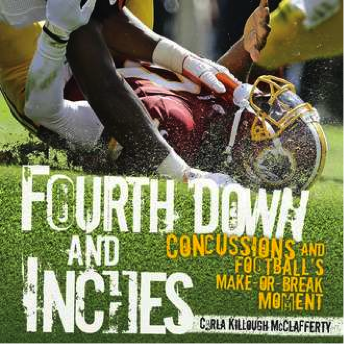
If you're an art teacher, have students read Jan Greenberg and Sandra Jordan's The Mad Potter: George E. Ohr, Eccentric Genius.
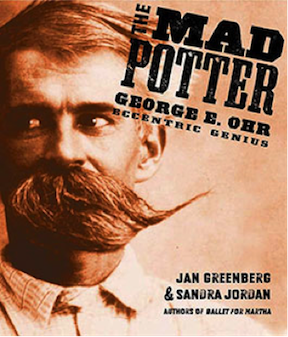
The school nurse can hand a kid my book Your Body Battles a Skinned Knee. The whole idea is to attach a LOT of reading and thinking to all aspects of a child's day.
You can find wonderful, grade appropriate children's nonfiction on just about any subject, engagingly written by top authors, in the free database on the iNK Think Tank website.
We nonfiction authors spend our lives practicing the CCSS in the process of creating these books. Art is a product of people who have internalized rules and practiced skills so that contingencies ( feedback from the world and from themselves) can continue to shape them and their work. Although you can find evidence of the practice of the rules in the works of masters, art allows the rules to be molded, refined and applied through the filter of a single human mind. This revealed humanity is the common denominator of the authentic communication that is art in all its forms.
One of my colleagues, award-winning history author Jim Murphy recently analyzed how he incorporates those behaviors in his process in his recent post "The CCSS and Me: I Could Be Wrong." Yes, he sees the CCSS as something he does all the time. His specific work habits fit into this rubric. It is easy to point to where and how after his work is done. That's why all of us nonfiction authors are not afraid of standards. We authors manifest the standards as do great teachers. We can just do our work and retroactively tell you what standards are met. But it would be as ludicrous to ask Jim to construct his next book by following the CCSS guidelines as it would be to ask a child to parse a correctly articulated English sentence.
Ever wonder where the test creators get the material on which to ask questions for those high-stakes standardized tests? A typical question consists of three paragraphs of, usually, nonfiction prose that the test-taker reads for meaning and then responds to questions by filling in bubbles for electronic scoring. I can assure you that the companies who create tests don't write the writing samples. Instead, they scour children's nonfiction literature and ask authors like me for the rights to excerpt our books. How do I know? I have a two-inch-thick folder of permissions I've granted over the years.
Interestingly, my books are seldom the required classroom reading material. Content in disciplines like science and social studies is "gone over" from textbooks where the writing is flat at best and insulting to the reader at worst. On the tests, the kids are asked to figure out, for example, "what is the author's point of view?" How are they supposed to do that if they have only been exposed to politically correct material formulated by committee where there is no author pov?
Recently I received an email from a "passage writer" at the Center for Educational Testing and Evaluation (CETE) in Lawrence, Kan., offering me $500 to write passages for the assessment tests. There were two attachments: "Tips for Writing Topics" and "Writing Guidelines." Here are a few excerpts:
"When coming up with topic ideas for reading passages, it's always best to go with something familiar to you. Choose topics in which you have prior knowledge or interest. This will make the passage easier to write, and will often reflect in the writing. Because writers may use a maximum of 5 sources when writing a passage, choosing passages in your realm of knowledge will also minimize the number of sources you have to rely on."
"Keep in mind that passages may not have references to drugs, sex, alcohol, gambling, magic, holidays, religion, violence, or evolution, and that topic ideas should not lend themselves to passages which would require such content."
"Use grade-appropriate vocabulary. To check your passage, use Microsoft Flesch-Kincaid Grade Level readability test (part of Microsoft Word programs)."
Clearly the authors of these documents didn't know who they were writing for. Did they think that after 90 books I need their tips? Do they have any idea how these "tips" flatten text and clip the wings of a talented writer? Is it their intention that the CCSS teach kids how to read bad writing? Don't they know that kids build vocabulary by being exposed to literature and spoken language where nuanced words are used in context, not through leveled readers with controlled vocabularies? And if you think kids can't learn multi-syllabic words, just talk to a 5-year-old expert on dinosaurs.
Another problem is that high-stakes testing produces an answer-driven culture in schools where getting the right answer becomes all-important. What happens when you give an answer? The inquiry stops.
Socrates gave us the key to powerful education more than 2,000 years ago. Questions, challenging questions, should drive learning. Creativity in science, history, journalism, and math comes from asking insightful questions. I love to tell kids the story of Isador Isaac Rabi (1898-1988) who won the Nobel Prize in Physics in 1944 for his discovery of magnetic resonance. He claimed he owed his success in science to his mother. Every day, when he came home from school she would ask him, "What good question did you ask today?" So I'm going to give you a few good questions for you to ask in assessing the learning of your children and the effectiveness of your schools:
Here's a question I've been asking my grandchildren and other school-age kids: Who among your teachers do you think is having fun teaching you? By "fun," I mean that you can tell that the teacher wants to be in the room with you, is engaged in the subject and cares that you are also engaged.
My grandson, Jonny, had to think a long time before he came up with his sixth grade Language Arts teacher. (He was in seventh grade at the time.) A tenth grader could only think of his young technology teacher. When I asked him why he accepted this status quo, he shrugged and said, "It is what it is." He goes to a highly rated high school in an upscale neighborhood.
A follow-up to this question is: How do you know that a teacher isn't having any fun teaching you? Jonny had an instant reply to this one: "Because I'm not learning very much."
Here's a question for teachers: What would it take for you to be the teacher you always dreamed of being? Their answers may be a better assessment than the "value-added" measures attached to student scores.
Not to ignore administrators: How can you expect teachers to teach critical thinking if they are not allowed to ask challenging questions about executing their jobs in a school system?
And while we're at it, here's one for the test creators: Since you're using our work as the basis for your tests, why don't you let us children's nonfiction authors take them?We should be able to ace them with flying colors, right? What would it mean if we flunked? I have absolutely no way of knowing how I'd do.
I'm just asking........
Lately, I've been travelling in the world of the educational policy makers--a strange and alien place to this children's nonfiction author. Recently, within a week, I had breakfast with Dr. John King, Commissioner of Education for the State of New York, and dinner with Diane Ravitch, educational historian and activist on behalf of public education. Don't get me wrong; these were not tête à têtes. Hundreds of others joined in the festivities. But I had a chance to listen and speak to each of them (two skills mandated by the CCSS). It is not possible to find two more well-intentioned, passionate advocates for effective education than these two. But they are not exactly in the same camp. Diane's group is opposed to the Common Core State Standards. New York State is obligated by law to implement them.
As a children's nonfiction author, I welcome the standards. They require that at least 50% of the reading in elementary schools and 75% of high school reading be nonfiction. There are only two rules that set nonfiction apart from fiction:
In nonfiction, nothing is made up. Period. No invented dialogue. Primary sources are cited. Procedures and instructions are explicit and replicable.
It is accurate and vetted (which might be a subset of rule 1).
But there is another distinction that is not obvious in the standards: the difference between high quality nonfiction literature and what many educators think of as nonfiction for kids - the flat, boring, uninspiring writing that is in textbooks. Many teachers are unaware of the riches nonfiction literature can bring to content. And since the CCSS says nothing about curriculum, implementing the standards means that educators are now free to insert wonderful books -of which there is a huge selection--into their science, social studies, history, math, art, music, and physical education classes. Teachers can continue to teach their favorite fictional literature but now the door is open to using nonfiction literature across the curriculum. So, to the teacher who told me that she didn't like the arbitrary quota of 50%, I say that when you add high-quality reading across all disciplines, even if you keep all the fiction you like in ELA, this quota is more than met. The CCSS definitely don't mean that you should substitute deadly prose about the real world for those magical moments in ELA classes when great stories come to life. In anticipation of the CCSS, I have formed an organization of about 30 of the top children's nonfiction authors so that teachers can discover their wonderful books in our FREE database on our website and bring the joy of learning back into the classroom.
I learned from John King that the CCSS came out of a governors' meeting several years ago. Governors want to attract businesses to their states. Before relocating, businesses want to know about the quality of each state's labor pool. The question for each governor was: What can your state's workers be trained to do? This generated a conversation about the skill sets needed by businesses and how well each state was doing in producing capable workers. The standards and measures for the different states was all over the waterfront. Rather than compete with each other, the governors agreed to work together to establish common standards for college and career readiness. And so the Common Core State Standards came to be. John King said: "The organization of CEOs for Cities did a study that showed if you added a single percentage rate for college achievement in NY you would add 17.5 billion dollars of economic activity." Hmmm...there's nothing wrong with that.
If you read the Common Core State Standards, you will see that they are quite benign. There is nothing in there about curriculum, what books are to be read, just a shift to reading a lot more complex text about the real world. I see it as an opening for us authors and a defeat for the textbook manufacturers (although they seem to be buying rights to books like mine.) That's why I was startled at the dinner when I heard the vitriolic hatred of the CCSS. And when I asked the speaker, a veteran teacher of 35 years, if he had read them, he allowed that he had not. The fly in the ointment is the testing. More particularly the high-stakes placed on the tests and the absurd notion that a teacher's value added comes from the way his/her students perform on the assessment tests. There is nothing wrong with testing. We've always tested. When I was a teacher almost 50 years ago my students took tests. There were three possible outcomes.
The student test performance was about the same as their performance in my class.
The student performed poorly on the test but well in my class.
The student performed well on the test but poorly in my class.
As a teacher, the only result I paid attention to was number 3. If the student aced the test but was doing sub-standard work in my class, I knew there was something wrong and I worked to correct it.
When I taught back in those days, I had autonomy to teach creatively. I didn't use the textbook but found other more interesting science reading material for my students on curriculum content. I worked to make sure that they understood the basics and gave them all kinds of fun details to make the basics memorable. We spent a less than a week practicing test questions just before they took the tests. They did just fine.
I agree with Diane Ravitch's criticism of the testing. Test prep, in my opinion, is a form of child abuse. Schools lose almost two months of instruction between the time spent on test prep and the tests themselves. The new tests, based on the CCSS, are predicted to produce dismal failure across the board. So what! Let's use the CCSS to teach the best way we know how. Give the tests with minimal test prep, use the data internally along with other measures of school effectiveness, and let the chips fall where they may. And, at least for the next few years, sever the connection between test results and real estate values. In 1986, I wrote an article for Parents Magazine called "A,B,C, or F: Test Your Child's School." In it, I said: "Taking these tests too seriously can be a big red flag. If a school gears teaching to these tests by drilling students on the bits of knowledge needed to fill in the blanks, bored, turned-off kids are a certain outcome. Ask what the school's policy is on standardized testing. Do teachers end up teaching to the test? Know that the best schools take testing in stride and have faith that good educational practices produce fine results on tests."
As a scientist, when I didn't get the results from an experiment that I expected or wanted, I figured that the problem lay in my experimental design, not in the natural phenomenon I was exploring. (Nature doesn't lie!) The test makers need to find other ways of measuring student achievement rather than a single yearly snapshot where teachers are given instructions on how to handle tests that have vomit on them so that the results can be tabulated. And the educational community and the public need to stop giving the test outcomes so much power.
Recently I received an email from a "passage writer" at the Center for Educational Testing and Evaluation (CETE) in Lawrence, KS offering me $500 to write passages for the assessment tests. Instead of excerpting my books, which they've been doing for years, they are now asking me to create new material. Maybe it's because I've upped my price for the excerpts. Many years ago, I didn't charge very much. After all, it was just two or three paragraphs written years ago that would appear on an exam. Back then, I didn't notice that the number of children who would be reading my work would be in the tens of thousands.
In recent years, I've wised up and charged considerably more for this limited use of a piece of my work, as have my fellow award-winning nonfiction authors. I guess the test creators realized that relatively few test takers (children) have encountered our books in their classroom work. Schools supply children with committee-generated reading material (i.e. textbooks), complete with worksheets, teachers' guides, study questions, controlled vocabulary and reading levels. The writing is pedestrian at best and downright insulting to the reader at worst. I'll wager that not a single kid picks up one of these books out of curiosity or to read for pleasure.
Meanwhile, our body of children's nonfiction literature is waiting on library shelves on the very same subjects that are in the curriculum. Since these books do not have a captive audience, the authors write to captivate. The books are designed to inspire and entertain as well as inform readers about the real world. One reason why these books are so good is that authors are writing material that they each feel passionate about and they have the freedom to use many of the same literary devices fiction writer use; humor, satire, poetry, and personal idiosyncrasies that give the works "voice." The books are beautifully illustrated and designed, a treat for the eye as well as the mind. The freedom for self-expression in nonfiction has been hard-won by many of these authors over the years. I, personally, have fought numerous battles with editors for playful language, activities integrated into the text, art that is woven into a description instead of using a disconnected caption, and insertion of humorous asides.
Many years ago, I was asked to write a science textbook. I was given an outline and writing guidelines that made me feel strangled. Although I needed the money I turned it down. "I don't write like this," I told them. "You could give an outline to Shakespeare and you might get something you'd like to publish but you wouldn't get Shakespeare." (Not that I'm Shakespeare, but I think you get my point.) Another example is my colleague, Steve Sheinkin, who wrote history textbooks for years until he couldn't stand it any more. His most recent book, "Bomb! The Race to Build--and Steal--the World's Most Dangerous Weapon", was a National Book Award Finalist, and won the Sibert, Newbery, and Young Adult Library Services Association awards. So you can imagine how thrilled we authors are that the Common Core State Standards require that our kinds of books finally be included in literacy across the disciplines in elementary and high school classrooms. Our step-child genre is emerging into the spotlight.
Not so fast, say the test-makers. Maybe the price for excerpts from excellent books by established authors has become too high, hence the offer to commission new passages. But the kicker to the soliciting email was that there were two attachments: "Tips for Writing Topics" and "Writing Guidelines." Here's a sample:
Topic ideas should not be too broad. Proposed topic ideas should be given in detail, in one to two full paragraphs.
When coming up with topic ideas for reading passages, it's always best to go with something familiar to you. Choose topics in which you have prior knowledge or interest. This will make the passage easier to write, and will often reflect in the writing. Because writers may use a maximum of 5 sources when writing a passage, choosing passages in your realm of knowledge will also minimize the number of sources you have to rely on.
Keep in mind that passages may not have references to drugs, sex, alcohol, gambling, magic, holidays, religion, violence, or evolution, and that topic ideas should not lend themselves to passages which would require such content.
And
Use grade-appropriate vocabulary. To check your passage, use Microsoft Flesch-Kincaid Grade Level readability test (part of Microsoft Word programs).
Clearly the authors of these documents didn't know who they were writing to. Did they think that after 90 books I need their tips? Do they have any idea how these "tips" flatten text and clip the wings of a talented writer? Do they understand that these are the same kinds of rules that make textbook prose so deadly?
The good intentions of the Common Core State Standards are being hijacked by the test makers. Suddenly they are arbiters of the quality of nonfiction children are supposed to comprehend and think about critically. So here's my challenge to them. Why don't you let us authors take your standardized tests under the same conditions that you give to children? You can't argue that we haven't mastered the standards, especially since you're asking us to create the material on which you base your assessments. I have no idea how we'd do. I can provide at least two dozen top nonfiction authors in all disciplines and more if you need a significant sample. I can promise we'll do our best. Whadya think?
iNK Think Tank has been pioneering a new kind of interaction with schools through Authors on Call, a group of nine nonfiction authors who are equipped to do interactive videoconferencing. (Many authors now Skype but there are other technologies that some schools prefer.) We call our programs Class ACTS where "ACTS" is an acronym for Authors Collaborating with Teachers and Students. They are not exactly school visits nor are they professional development for teachers but a hybrid that takes the books and expertise of an author and "bakes" it into the classroom experience with the "buy in" of the teachers and the students. Andrea Warren wrote up her Class ACTS experience and posted it here. Let me give you some other examples.
I have been working with Sarah Svarda, a media specialist from Discovery School in Murfreesboro, TN. She is using me as a mentor to help her 120 4th, 5th, and 6th grade library students learn how to do research. She teaches these students once or twice a week and since she has so many students and interactive videoconferencing is more effective with groups of 40 or less (so that kids can ask questions,) we decided that I would meet the students in smaller groups over the period of time that they were doing their research. Sarah would then model the lesson for the other students who didn't interact with me. So I met with the 4th grade just when they were starting the program, then with the 5th grade as they were several weeks into their research to help direct it more specifically, and then with the 6th grade as they were starting to write. I have one more session to go, which will be some kind of wrap-up.
The students' original idea of "research" is to look something up in an encyclopedia (or Wikipedia) and write up what they find, which often includes verbatim material, and turn it in as homework the next day. So, in effect, I was teaching them what I do when I start a project -- a long-term process that changes in time. As it happens, I'm just beginning a new book on hurricanes, so I do what all nonfiction authors do. I went to the library and took out every book on hurricanes I could lay my hands on. I showed the kids my pile of 25+ books and told them that I start by reading a lot of sources. This was a real eye-opener for them. I told them that I don't read every book but that I look at all the books and read the ones that grab me first. This was another eye-opener -- comparing sources and expressing preferences for different writers.
In addition to the four videoconferences, Sarah and I also chronicle what we do on a wiki -- a communal document. You can see the wiki for our work, as can parents and other people in the public, but only Sarah and I can write on it. Read it from the bottom up to get the chronology of our progress.
We are also working with a group of teachers in PA. Sue Sheffer is a retired educator working with the York School District on a Library of Congress grant to help teachers use primary source material. The group is scheduling sessions with our history authors: Roz Schanzer, Carla McClafferty, Jim Murphy, Andrea Warren plus Myra Zarnowski, our children's lit consultant who wrote a terrific book for teachers: "Making Sense of History." The raves for each author have been off the charts.
Alexandra Siy is working with teachers from Lewis and Clark Elementary in Missoula, MT. They are using her book "Cars on Mars" as a mentor text for their own research. Here is the link to their wiki. Again, the enthusiasm for the program is unequivocally positive.
Here's what our Class ACTS programs offer that is different from a school visit or professional development for teachers:
- Author school visits are considered "enrichment." Class ACTS are programs that are aligned with the curriculum and the classroom work of the students. They take place over a period of time from two weeks to several months. They bring the excitement of a school visit to daily work, although the author isn't present on a daily basis. Since a Class ACTS program is no ephemeral one-shot experience, it can be transformative for students.
- An author visit is about the author and the author's book. Class ACTS is about students and their work. The shift is to the "demand" side of the school money -- it's where the rubber meets the road in terms of results, so here authors can make a profound difference. Students are discovering that doing work in depth produces a more thoughtful learning experience than simply "covering" material. And content is now starting to matter again.
- All educators know that the key to learning is motivation. When students are motivated they will do the hard work of learning. Having an author involved in the process provides motivation. Studies have shown that another character trait exhibited by successful people is grit. I maintain that none of us nonfiction authors would be here without it. We also exemplify the skills mandated by the Common Core Standards.
- Scheduling is much more flexible than a school visit because it's just a short time during the day and you don't need travel time, etc. So the videoconferences are booked with a short lead-time and are given at the optimum time for the students.
- Teachers find that all-day professional development sessions are not nearly as useful as having a personal learning network -- a place to go to ask a quick question on an as-needed basis. Through Class ACTS, an author becomes a part of the teachers' plan with very positive outcomes.
Last year, Authors on Call piloted a program with many authors and one school. This year we have sold a variety of programs and we're learning all the time. Here's some of what we're discovering:
- The teachers we're working with this year are PHENOMENAL. Make no mistake, there is a lot of extra work figuring out how to use us and our books and our skills so that students benefit. The teachers we're currently working with are early adopters who see something for themselves in taking a risk and doing something different. As a result, they are, perhaps, a self-selected group totally committed to their students. We authors are learning from them in this truly collaborative effort. I have no doubt that our incredibly successful outcomes are due to the quality of the teachers we're working with.
- Last year, in our pilot program, the best teachers were the ones that signed on first. They created a bandwagon effect with other teachers joining in because they didn't want to be left out. But the teachers who joined later were not as effective.
- A successful program depends on planning, collaboration and commitment. But the rewards are beyond anything anyone imagined in terms of student output. It is humbling to see how much talent children have when you give them the opportunity to strive, think, create and shine.
- It takes patience for a new idea to take hold. The success of Authors on Call depends on schools that have the videoconferencing technology to understand the value of books and authors, and for schools that appreciate books and authors, getting the technology. We're moving forward, however, and Authors on Call is leading the way.
For more information on Class ACTS programs, you can download a pdf of our brochure here.
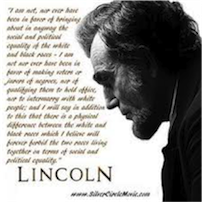 The newest crop of award-winning films from Hollywood, "Lincoln," "Zero Dark Thirty" and "Argo" are all based on true stories. The key word here is "based." It seems that filmmakers have no trouble inventing scenes, creating dialog and inserting information that is completely made up if, in their opinion, it makes a better story. The rationale? Moviegoers "expect" an exciting chase scene in "Argo," or a Navy Seal raid on Osama Bin Laden's home to be noisy even if it never happened. Historians are worried because so many people are learning history from the movies. Will the story from the movie's point of view become the myth that supplants the careful scholarship and meticulous digging that drives the best historians to get it right? The good news is that these transgressions are being noticed But we authors who contribute to this blog, who craft nonfiction for children, may be held to the highest standards around. We're not allowed to make anything up. Period. Maybe we're the last group on the planet to be held to such high standards. Anna Lewis's recent post on Just the Facts hows how hard we work to make sure we're accurate. The newest crop of award-winning films from Hollywood, "Lincoln," "Zero Dark Thirty" and "Argo" are all based on true stories. The key word here is "based." It seems that filmmakers have no trouble inventing scenes, creating dialog and inserting information that is completely made up if, in their opinion, it makes a better story. The rationale? Moviegoers "expect" an exciting chase scene in "Argo," or a Navy Seal raid on Osama Bin Laden's home to be noisy even if it never happened. Historians are worried because so many people are learning history from the movies. Will the story from the movie's point of view become the myth that supplants the careful scholarship and meticulous digging that drives the best historians to get it right? The good news is that these transgressions are being noticed But we authors who contribute to this blog, who craft nonfiction for children, may be held to the highest standards around. We're not allowed to make anything up. Period. Maybe we're the last group on the planet to be held to such high standards. Anna Lewis's recent post on Just the Facts hows how hard we work to make sure we're accurate.
The erosion of the truth seems to be touching journalism as well. One previously absolutely inviolate journalistic standard was that every fact must be verified by at least three independent sources. It's hard for a reader to check on the accuracy of many stories because journalists can keep some of their sources secret. So one outcome is that people wind up reading and tuning in to the media they agree with. The biased medium becomes the arbiter of what it wants its audience to believe, cherry-picking from the many conflicting "facts" being touted in public that support different sides of critical issues. It's no wonder that the "echo chamber" of Fox News's [Un]fair and [Un]balanced skewed version of the news kept them in a bubble oblivious to the possibility that Obama would be elected, even after the election outcome was called by other news services. Many pundits dissected why Fox News got it wrong but the consensus seems to be that they had problems believing the inconvenient truth of independent polls so their own slanted views became their own truth. I Googled the words "journalism erosion of standards" and up came a slew of posts with many different examples about the extent of misinformation foisted on the public. There was so much disagreement between these posts that I'm now confused about the truth on a variety of issues. But all the articles seem to agree that many news organizations play fast and loose with the truth in the interest of ratings, readership, political and social bias, and the bottom line. Propaganda is alive and well in the good old USA.
What happens when misinformation is embedded in a compellingly told story that has a lot of truth to it? What should our response be when it is uncovered? Here's a thorny problem from the film "Lincoln": It seems there were two invented Connecticut "nays" against the 13th Amendment voting scene in the movie thus casting the Nutmeg State incorrectly on the wrong side of history. My initial reaction was: where were the fact checkers? This is the kind of error that is so easy to correct. Were the filmmakers being lazy or sloppy? The Connecticut congressman, Joe Courtney, called out the error in an open letter to director Steven Spielberg. In response, the screenwriter Tony Kushner admitted that it was no accident. He had made the changes deliberately. Kushner argues that the facts were changed to serve the larger story: "These alterations were made to clarify to the audience the historical reality that the Thirteenth Amendment passed by a very narrow margin that wasn't determined until the end of the vote. The closeness of that vote and the means by which it came about was the story we wanted to tell. In making changes to the voting sequence, we adhered to time-honored and completely legitimate standards for the creation of historical drama, which is what 'Lincoln' is." In other words, he used artistic license to shorten the voting scene in the film from the actual historical voting time in the interest of a dramatic effect. So it wasn't laziness or sloppiness. I think he has a point.
Dramas like "Lincoln" and "Argo" create tremendous interest in history. When kids encounter a compelling story or an amazing fact they want to know if it is true. The proper answer is "mostly." But a curious kid now wants to know what's true and what isn't. Aha! A teachable moment! What an opportunity! Telling details (small things that catch one's attention) can add to the credibility of a work if true or, if incorrect, indicate that the work was not vetted for accuracy and perhaps shouldn't be trusted. If only the interested person knew for sure which were which!
Maybe this is an opportunity for us children's nonfiction authors. Perhaps it takes authors who write history for children to create white papers on these films. They could explain what is true and where truth has been manipulated. They could ask questions like: Can you think of another way to meet the requirements of an historical drama without changing the facts? Are there any fabrications that are unacceptable in a work that portrays real events? If so, what are they and why should they not be included? What does a careless error of fact tell you about the creators of the work? Whose responsibility is it for those errors? Is the artistic license justified? Why or why not?
Searching for truth drives us authors when we're creating our books. Perhaps we need to add our voices into the larger conversation engendered by the popular media.
Over the years I have done countless school author visits, traveling to 49 states (only missing North Dakota) Canada and Mexico, Asia and Africa, Europe and the Middle East. I've been in excellent schools and indifferent schools but my recent author visit to Briarcliff Elementary, a K-1 school in Shoreham, L.I., was an outstanding exception. During this period of national school "reform," as dictated by lawmakers and politicians, it is refreshing to see that that high quality education is alive and well in a public school. I have long believed that the quality of a school is due, primarily, to the passions, effectiveness and resourcefulness of the principal. My evidence is admittedly anecdotal. But I think it is worth examining in light of the clouds on the horizon by policy makers who have little first-hand knowledge of what education should be, who are in bed with the corporations that dominate the school market, and who are determined to "fix" something, like this school, that isn't broken.
The principal, Patty Nugent, is warm, outgoing and welcoming to her students, her staff and especially to me, a visiting stranger. She is obviously in control of her school and her time since she cleared her schedule to host me for the entire day. This almost never happens to me, an outsider, paid for by the PTA to "enrich" their children's experience of science. Typically, I am greeted by the principal who then disappears for the remainder of the day. Not here. Patty and I spent the day together in a freewheeling discussion (between my programs) about the best ways to get children off to a great start on their journey towards meaningful lives. She began her career as a classroom teacher; then spent some time doing "Reading Recovery" so she has the hands-on experience working with children essential to an administrator whose title means "first" teacher. Her mission as principal is to empower her teachers so that they can inspire and empower their students. This is especially important for these young children who are just starting the process of acquiring the skills of literacy. She is not a micromanager, giving her staff plenty of room for their own creativity and critical thinking. Yet she will run interference with the powers-that-be and game the system, if necessary, to protect the learning that is going on in the classrooms.
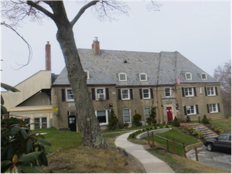
The school building, despite its bright red front door, looks more like a French Country Estate than the typical suburban school, perhaps because it was once a French girls' boarding school. It was, in fact, the model for the mansion featured in the Madeline books by Ludwig Bemelmans, who lived down the street from it. There have been many extensions over the years adding space and facilities, but at least one classroom still has the heavy, dark ceiling beams of the original structure. Every hallway and classroom is festooned with student work giving the overall impression of creativity, industry and student engagement. There is a lot of hugging and handholding among students and teachers. But my biggest clue to the specialness of this school came from the behavior of the students and the role of their teachers at my performances.
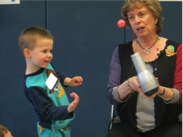
One of the skills emphasized by the Common Core State Standards is listening. As a presenter, I watch my audiences carefully. Children can be twitchy, sleepy, chatty or even act-out attention-getting behavior during a presentation, especially the youngest children. As they say in the parlance of show business, it's a "tough room" to play. When I present to a K-1 group, I often follow the advice of author/illustrator Peter Catalanotto who long ago told me to seat the first grade in front of the kindergarten because the older children model better audience behavior than the younger ones. Everyone has a name card so I can call on them personally creating an instant intimacy as if I really know them. My presentation to this age group is shorter than the one I do for older kids. It is very interactive with choral responses to many questions. I make a teabag fly, levitate ping-pong balls and blow up toilet paper. I can tell that they are engaged from the brightness of their eyes and how they lean forward towards me. My biggest problem is to return them to a listening mode after they get excited. What struck me about the children of Briarcliff Elementary was that their involvement and decorum was well beyond my expectations for K-1. There was no lecture from their principal or teachers about how to behave at an assembly. Yes, they got excited and chatty with each other as they marveled at objects magically suspended in air. But they quickly quieted down, demonstrating unusual maturity and self-control. I almost never do Q&A with this age group because they often "share" a story instead of ask a question. However, I decided to break my rule because these children seemed ready for it. After I asked for questions and a child started to "share," his teacher gently interrupted and asked, "Is that a statement or a question?" The child immediately saw that his comment was inappropriate but he was not embarrassed or ashamed of his mistake. A school must be a safe place to make mistakes (even in public) and clearly Briarcliff is just that.
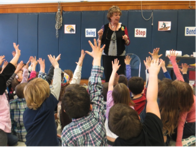
I visited a few classrooms and talked to some of the teachers who took obvious pride in their work. But they are all aware of the coming changes tied to the CCSS and fear that they will be constraining. In one classroom, there was a live webcam shot of a nest of baby eaglets on the large computer screen. The children were fascinated, watching this amazing bit of nature in real time. But the teacher confessed she could only put it on during "snack time" and there was no time in the day to explore books about eagles. She was afraid that soon she would be spending more time accounting for how she was meeting the new standards instead of actually meeting (undoubtedly surpassing) them. Already, excellent teachers are complaining that constant recordkeeping is eating into valuable instructional time. Top teachers know that when they teach well, they more than meet the standards. Let others observe them and parse the lesson. It's like asking concert pianists to notate the fingering of a piece they've mastered. (Not a good use of their time, to say the least.)
The teachers here are consummate professionals, not touchy-feely idealists or burnt-out apathetic veterans. A teacher came in to see Patty to share the results of an evaluation of a new student. They both knew exactly where the child was with respect to her reading skills and they have many arrows in their quiver to move her to the next level. No child slips through the cracks here.
In recent years the "reformers" have shone their spotlight on school "failures." Yet all good educators know that student achievement in schools is built on experiments -- taking risks, trying new things, seeing what works and building on the successes. They are realists who know that not every venture produces a home run. They also know that collaboration -- a collegial support system among the faculty and students working together -- builds more positive results than competition. Current policies are throwing out the baby with the bathwater. Suppose a school got rid of all its failing students? That would definitely solve its score-keeping problem. Getting rid of failing schools, punishing them for failing, and starting over with new schools to improve the scores is as doomed as a society full of high-school dropouts created by failing schools. As a former board member of a charter school, I saw first-hand how difficult it is to create a terrific school from scratch, no matter how well-intentioned the founders nor how well-funded the venture.
Why can't successful schools, like Briarcliff, help other schools? Why is a school's success often achieved by subversive practices that used to be hailed as great teaching? Why can't we just go back to letting teachers do what they dreamed of doing when they entered into this profession? The workplace is crying out for employees who can learn new things, who are creative, who are self-starters. Schools that prevent teachers from modeling these behaviors will not produce the educated workers that employers seek. It makes me sad that, in the public school landscape, Briarcliff is such a singular exception and that its wings may be clipped as an unintended consequence of the next dictum from on high.
Early in my career, before "Science Experiments You Can Eat" was published in 1972, I contracted to write a book on how money works for a series called "Stepping Stone Books." I had written a few books called "First Books" for Franklin Watts (now an imprint of Hachette) but this assignment was with a new publisher, Parents' Magazine Press (which apparently no longer exists). I entitled my book "Making Sense of Money," and set about creating it. I remember that it was a struggle. I had to educate myself in economics (not my strong suit) and actually read (plowed through) Adam Smith's "Wealth of Nations." I labored long and hard before I finally sent it off to my editor (now long deceased). She returned the manuscript with a cover letter so scathing that I destroyed it (now, I wish I hadn't) but I well remember her searing criticism: "Your manuscript shows little thought or care. Writing for children is a serious business. You have a lot of nerve thinking you can do this." The returned script was covered with blue pencil. (Daggers to the heart!) My husband was outraged. He thought I should tell her to go do something unmentionable. "But we need the money," I said.
So here's what I did. By return mail I wrote:
Dear Lillian:
Thank you for your comments. I'm sorry that I disappointed you. I hope my next attempt comes closer to your expectations.
I couldn't look at the script for three weeks. Then I bit the bullet, took myself by the scruff of my neck, and forced myself to rewrite, paying close attention to every comment, conceding to her language whenever possible. My pain and efforts paid off. The book was published and I went on to write three more for her. A number of other authors, more prominent than I, also worked for her in the Stepping Stone series. When I read their books I noticed that we all sounded exactly alike. Lillian stifled each author's voice with her heavy-handed blue pencil to create a uniform style in a multi-author series. Clearly, she knew how to shape us up to fulfill her vision for the books. (Now, when I want an example of bad writing to show students, I use the first paragraph of one of those books.)
That was my first clash with an editor, but not the last. Over the years I have fought many battles for various creative aspects for my work; won some and lost some. But I don't think I'm unique. My personal story is representative of countless editorial skirmishes many other nonfiction authors have also engaged in, initially to gain a place at the table as professionals and then later as we keep pushing the envelope to make our genre a true art form.
In 2009 an editor told me that my submission didn't meet National Education Curriculum Standards and she sent me the link so that I could read them. My first reaction: steam came out of my ears. My book met seven out of eight standards! My second reaction: I can't do this alone. I'll bet there's help out there from other authors. So I founded iNK Think Tank from the wonderful and extraordinarily talented community that is the Interesting Nonfiction for Kids blog (I.N.K.) founded in 2008 and now in its sixth year: a small but mighty band dedicated to bringing the books and wisdom of nonfiction authors into the classroom.
Fast forward to 2013:
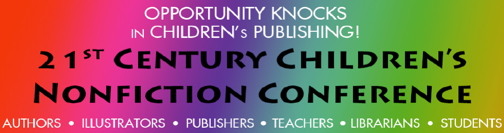 The "21st Century Children's Nonfiction Conference" will take place on the weekend of June 14-16 in SUNY, New Paltz. Bender Richardson White (BRW), a nonfiction book packager in the UK, is the main corporate sponsor. But iNK Think Tank is also a corporate sponsor. (How 'bout that!) The conference will provide editorial coaching workshops for new authors, networking for established authors, a forum for nonfiction publishers to discuss the changes in the marketplace, and strategies for teachers for using nonfiction in their classrooms as mandated by the Common Core State Standards. Lionel Bender, founder of BRW, asked me to review an editorial he was preparing for "Publishing Perspectives" a British online magazine. (I'm now editing an editor; how 'bout that!) His editorial, published on March 25, is called "Children's Nonfiction Publishing Comes of Age." On the Saturday morning of the conference, I will be telling my story of the evolution of our genre, "Winning the Nonfiction War," as the keynote speaker. Hopefully, it will pull more recruits into our cause. Understanding the real world and the various disciplines that explain and describe it needs more than an encyclopedia (or even a wikipedia) and textbooks. It requires many voices and a subtext of humanity.
The name on my birth certificate is, "Vicki Linda;" it means "beautiful victory." Hmmmmm.....
|
|
|